Saturday, March 03, 2007

Music Heaven

Someday I'll get to these events - but in the meantime, I have some photos, information and links about the Panama Jazz Festival and Carnaval de Panamá at my Panamá Tourism page.

The Jazz Festival just gets better each year! And this year's Carnaval had an incredible line-up of musicians over 5 days, on 3 stages. Add a cow pasture and sleeping bags, and you've got a salsa/reggaeton/tipico Woodstock! 2008 should be even better.

Alison

Tuesday, December 19, 2006

My holiday greeting to all

Bridge of the Americas, Panamá
The canal joins oceans, the bridge joins continents
AW

Saturday, October 28, 2006

More info and links

Some more interesting articles and sites, which I can't resist adding:
Enazuero.com has a video Salute to Panama
A menu from a 'tipico restaurant' Al Tambor de la Alegría
Photos in The Panama News of Nostalgia Night with 60s-70s musicians
A column in La Prensa's Mosaico magazine about 'Panhattan' and the building boom
Rubén Blades' editorial Se amplia la imagen del país about the widening of the Canal
An article in the Washington Post about saving Panamá's golden frogs
An interesting new travel book There's A Hole in the Boat by Darrin DuFord
Even Donald Trump loves Panamá.

Here are a couple blogs with great photos: at agorophoria.com and skyscrapercity.com.
Also, interesting coverage at cnn.com of the Canal handover in 1999. The one-sentence summary of the events in the zone in 1964 is a little faulty, but there's some nice information in the links area.

Portrait painter Stephen Bennett visited Panamá in 1996 and painted many faces.

AW

Monday, September 25, 2006

Photos from Jorge, and some stuff I forgot

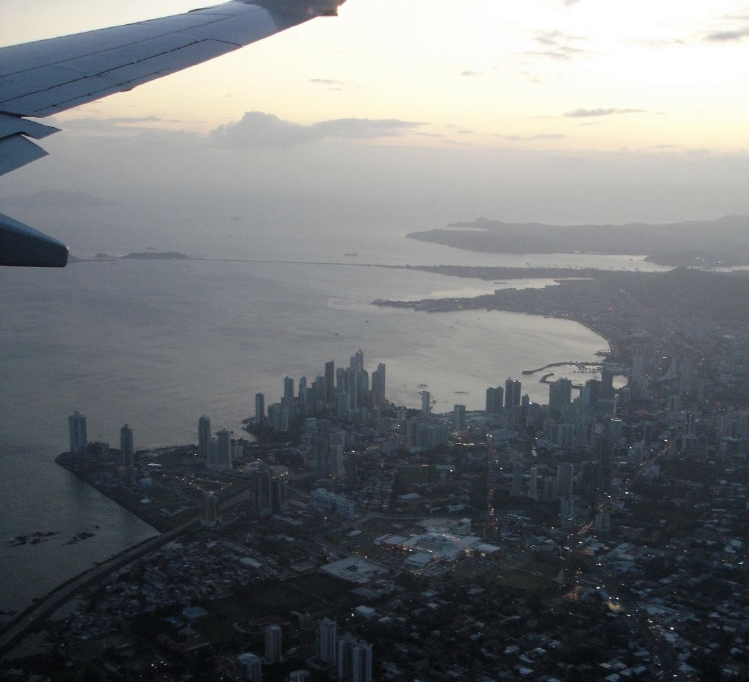
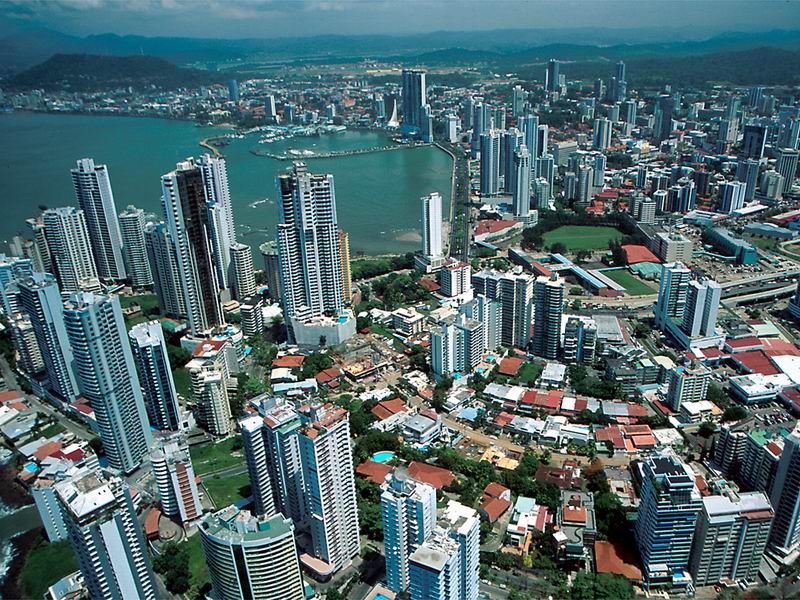
Jorge took this when flying into Panamá City


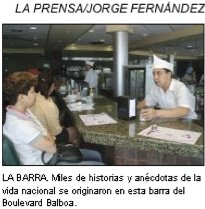
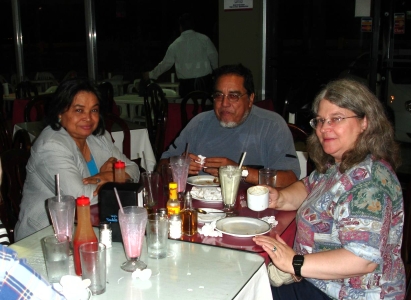
The night my plane landed, Mr. and Mrs. Alegria took me to the Café Boulevard Balboa, a diner-like institution known for its grilled sandwiches (emparedados) since 1959, and open until 1 am. After more than 50 years it is moving, as reported in La Prensa.


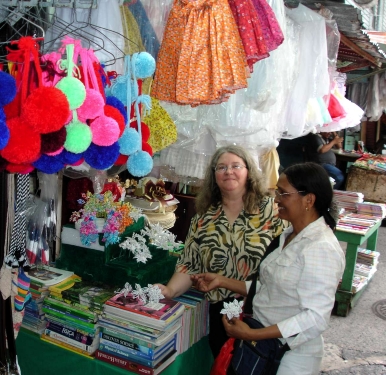
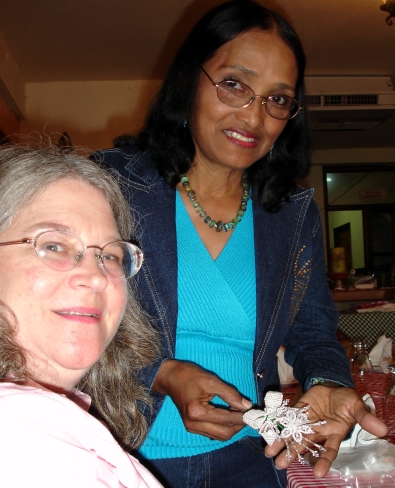
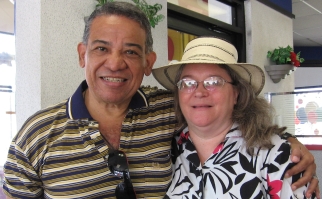
The next morning, Marina and Tony Zarak took me to Salsipuedes to buy my hat. Here Marina is helping me pick out some tembleques to bring to my daughters.


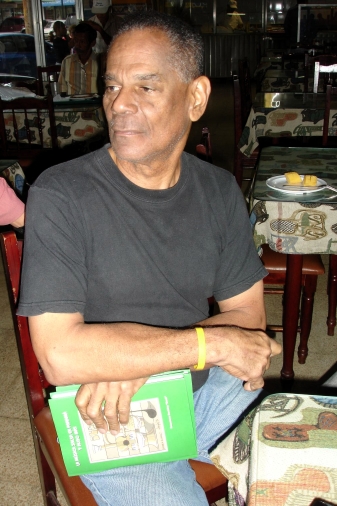
Here is a nice shot of Francisco Buckley "Bush", holding a copy of his book La Musica Salsa en Panamá y Algo Más.


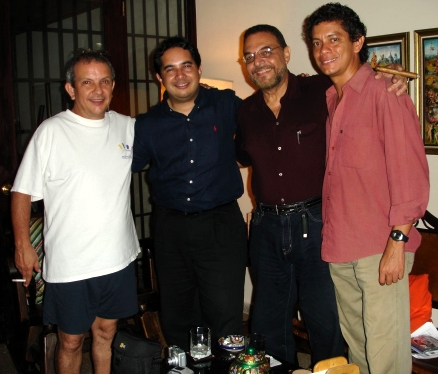
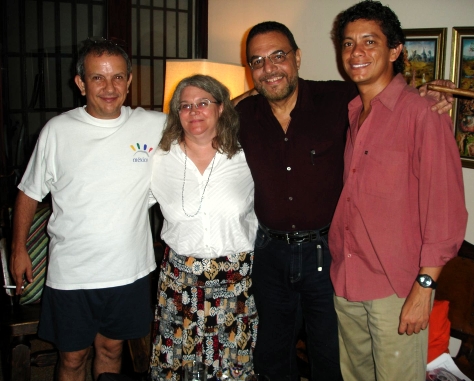
Rómulo Castro, Jorge, Roberto Cedeño, and Luis Arteaga


And the same guys posing with me.


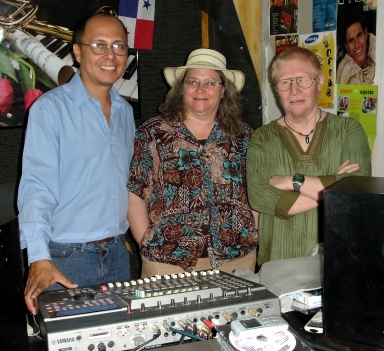
We also visited Ricardo Vizuete in his recording studio, with Marden Paniza - both part of the Bannaba Project.


I'm working on a couple new pages for the maestravida.com site with more information about all the musicians we met with. I'll add the link to this blog when the pages are done.
AW

Thursday, September 21, 2006

Maps and Links

Being a map geek, I had to figure out all the places I went in those 4
days. I left out the artists' homes or the places where I had no idea
where I was. You can see most of the places color-coded by day on
my map.

Brown: Tuesday night 8/29, fresh off the plane
Pre-a - Café Boulevard Balboa!

Red: Wed. 8/30
Aa - Palacio Lung Fung
A - Plaza Herrera
B - Plaza Francia, Palacio de Gobierno
C - Monumento de los Martires
D - Mini Max restaurant

Green - Thurs. 8/31
E - Mailboxes Etc. & Multiplaza Pacific Mall
F - La Prensa
G - Miraflores Locks Restaurant (top left, actually off the map)

Blue - Friday 9/1
H - Restaurante el Montuno (Via Cincuentenario)
I - Centro de Capacitación Ascanio Arosemena
J - La Esquina de Maelo
K - Amador Causeway (bottom left, actually off the map)
K2 - Ricardo Vizuete's music studio
L - Tasca Angel Bar

Purple - Saturday 9/2
M - Ristorante Italiano Pastísima Da Gaetano
? - Noriega property

The Alegria home where I was staying is off the map on the right (center.)

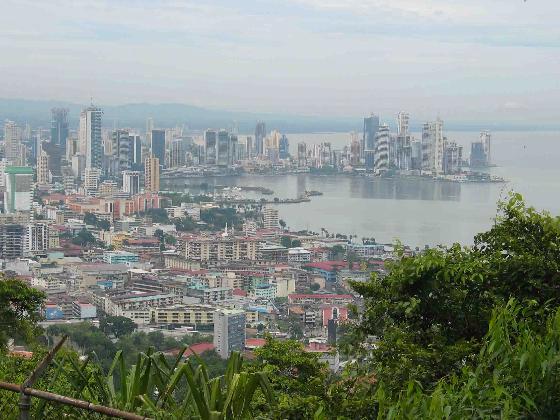
Here are a couple photos of the entire city:

Northeast from Ancon Hill towards the new part of the city.


Southwest from the skyscrapers toward Ancon Hill.
Casco Viejo is at the far left, and the Canal in the background.


Interesting links:

An interactive map of Casco Viejo

A description of Panamanian food

Articles in the latest edition of The Panama News about jazz, petrophyphs, and Cabaret
in Panamá.

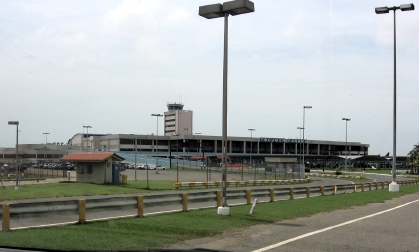
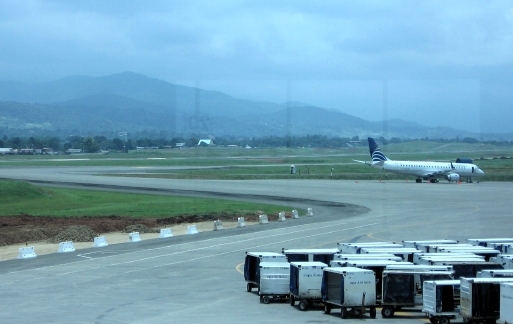
On Sunday 9/3 I left Panamá from Tócumen Airport on Copa
Airlines. The photo below of Tócumen isn't very good, it's a nice, modern well-organized airport which reminded me of the one in Manchester NH (which I like much better than Logan in Boston.)


AW

Friday, September 15, 2006

History and culture

My first morning was spent with Marina de Zarak, Jorge's aunt, as she showed us the best places for crafts and souvenirs, including "Salsipuedes" - 'Leave, if you can'. See the polleras and tembleques she makes at Panamapolleras.com.


The first thing I bought was a montuno hat, the real folkloric hat from Panama (not the "Panama hat" from Ecuador.)

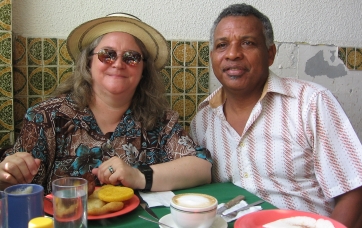
Here I am at breakfast with our friend and taxi driver Rodolfo Bethancourt (No. 9818).

If anyone needs a recommendation for a driver during a visit, contact me!


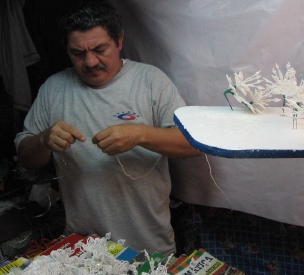
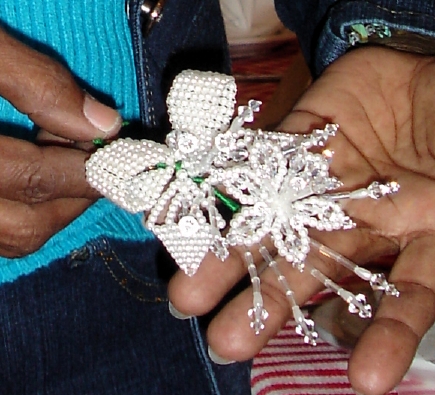
This man is making and selling 'tembleques', the beautiful folkloric hair ornaments..


Here Marina is presenting a gift to me (on HER birthday!) of a tembleque corsage which she had made that morning, "number 1 of 1."

I was incredibly moved! What a lovely gift, which I treasure.


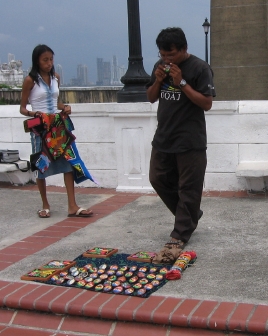
Street vendors with Kuna molas and flutes


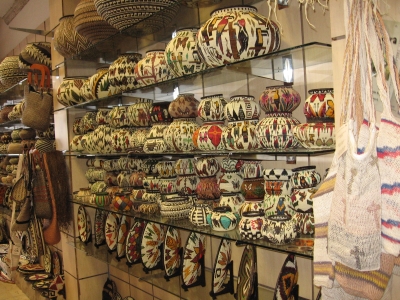
And woven baskets and string bags from a different indigenous group from, I think, Bocas del Toro.


We also squeezed in some actual historical locations and monuments!


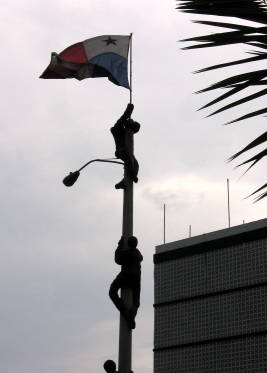
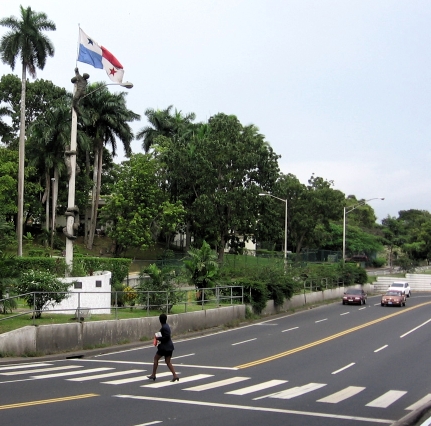
We visited the Monument to the Martyrs, showing three figures climbing a lampost to raise the Panamanian flag, commemorating the events of January 9, 1964.


To get there we had to cross Avenida de los Martires on the "crosswalk of death" - sprinting between 4 lanes of onrushing vehicles.


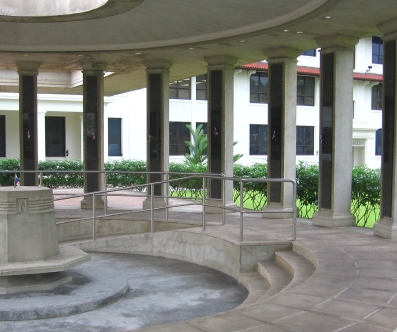
Also commemorating those events was the memorial at the former Balboa High School building in the former Canal Zone, now the Ascanio Arosemena Training Center.

In the center is a simple pedestal marked with N, S, E, W for the directions of the compass.

Each column is engraved with the name of one of the 21 who died during these events here. There are more photos at my January 9 1964 page.


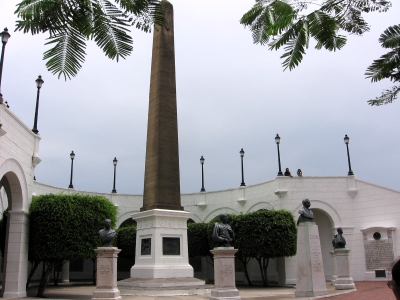
At left is Plaza Francia, at the tip of Casco Viejo.

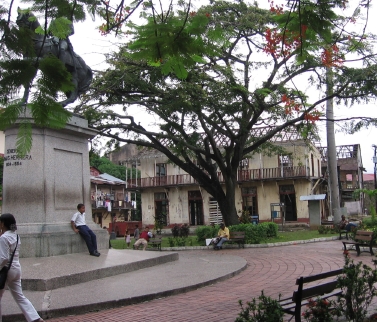
At right is the actual statue at the center of Plaza Herrera.

The song named "Plaza Herrera" is on the album Antecedente.


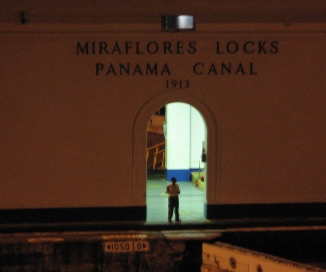
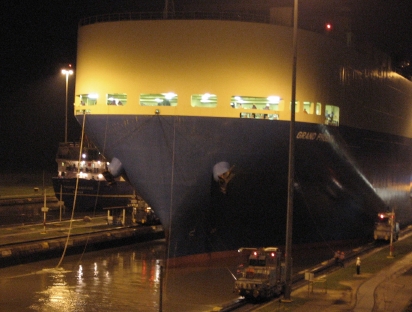
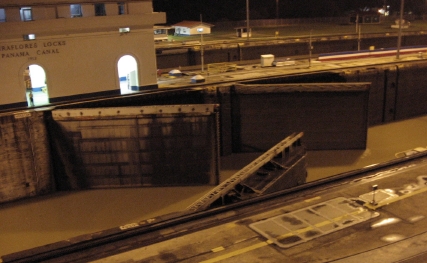
During dinner at the Miraflores Locks Restaurant, we watched the ships go through
the locks.


We had an amazing view of the locks, right below us.


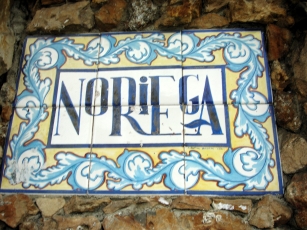
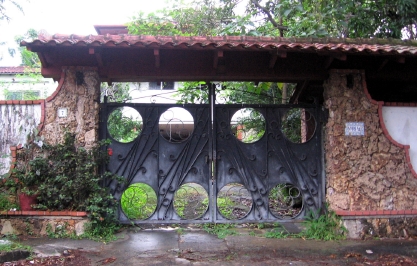
We also drove by the Noriega property, all overgrown and in disrepair.


AW


THE FOOD WAS INCREDIBLE

In the 4 1/2 days I spent in the country, I ate an amazing variety of delicious food.

Breakfasts:
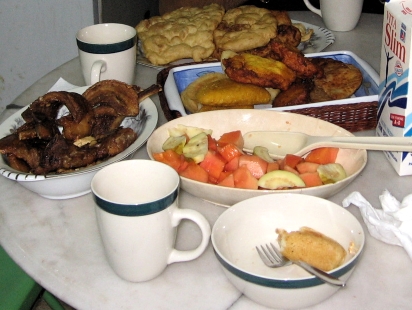
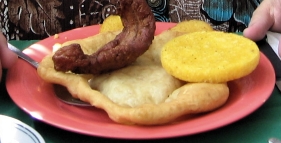
Various Panamanian fried things - Hojaldras, tortilla de maíz, bollos de maíz nuevo, empanadas de maíz y carne, y tasajo - fried bread, Panamanian crunchy yellow corn fried and round tortilla, compressed boiled new corn dough, corn turnovers filled with meat, and roasted steak with spices.
My favorite was the yucca carimañola, sort of like a light fluffy knish - and fresh papaya, fresh guava. ¡Delicioso!


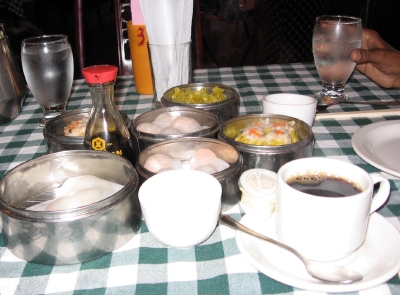
One morning we had dim sum at the Palacio Lung Fung.

Oh, and everywhere, the coffee was GREAT.


Lunches:


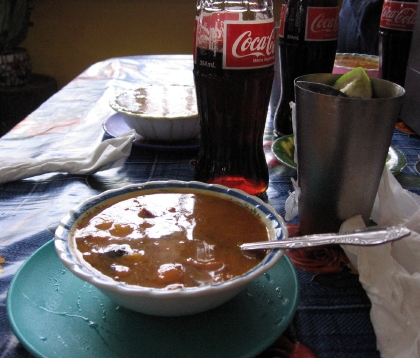
Here is some delicious seafood soup to start,

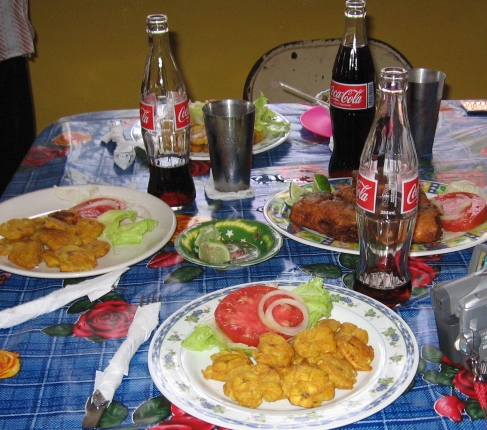
followed by incredibly light fried bass, plantains, and salad.

We had other lunches at quick cafeteria type places, also very tasty, and very cheap.


Dinners:


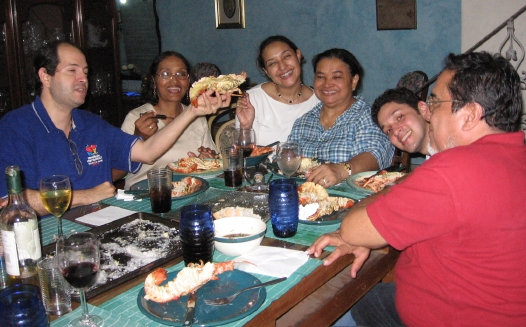
Lobster Thermidor prepared by Mrs. Silia de Alegría.


At left is Victor Giovanny Fiorina, of pinatasquehablan.com.


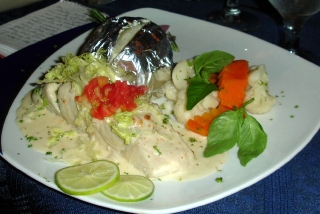
Thai Sea Bass at the
Miraflores Locks Restaurant.


While we ate we watched the huge ships pass through the locks from
our outdoor table.


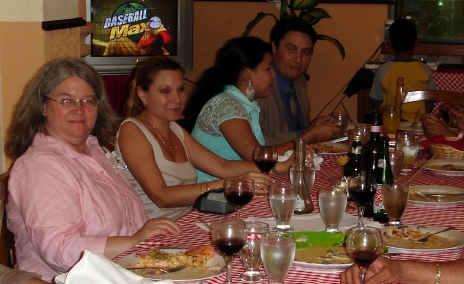
And the large family birthday party
at Ristorante Italiano Pastisima Da Gaetano (chef: Gaetano Maturo)
where there were platters of
five kinds of pasta.


We also had emparedados, crepes, etc. - everything but bagels.

AW

An interesting question

Jane asks if there is some provision for the poor who are being displaced by all the remodeling and improvements. I don't know, but my guess is... no. I have read that like other Latin American countries, Panamá is a nation of haves and have-nots, with statistics indicating some 30% of the population lives in poverty - 12% in extreme poverty. There is an interesting speech by the former U.S. Embassador here.

Everyone who spoke of the dislocating the poor for rebuilding had about the same observation: 'it's too bad, but it has to be done.' Our taxi driver, who was a wonderful guide, shepherd, and protector, expressed the certainty that all the new high-rises going up were being built by foreign investors who would probably bring their own people to work. He didn't believe that these projects would provide any economic help to the slums nearby. But he is all in favor of attracting tourism, and almost embarrassed when we encountered some small inconvenience.
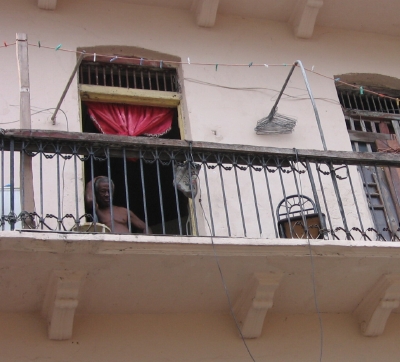


We were warned about crime, but I had trouble feeling any sense of danger - I lived in NYC in the 70s, I know what danger is! But I think it has to do with poverty - and a resentment of these visitors who are pushing them out of their homes. When this man saw us taking photos, he was threateningly angry. The same thing happened to Jorge in a city park on a different day.

Yet statistically, most crime is much lower than, say, in the state of South Carolina, similar in size and population to the country of Panamá.


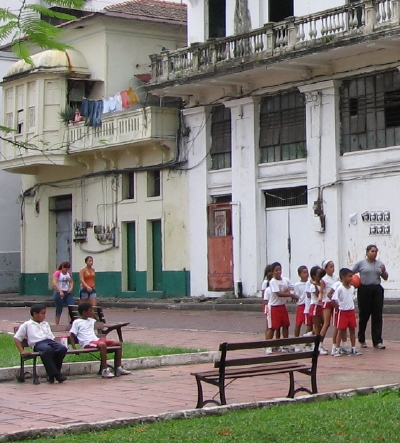
And life goes on, you know, where you live. These were taken at Parque Herrera:


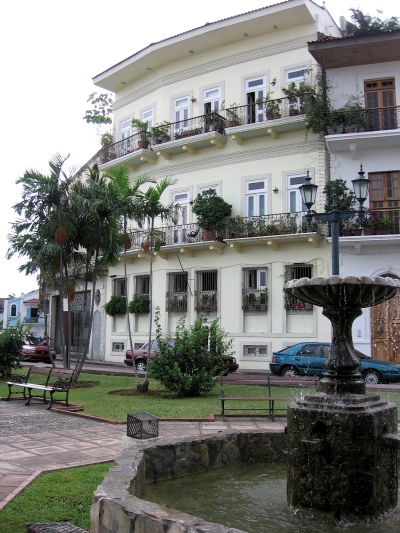
There were so many beautiful buildings to photograph, like these:
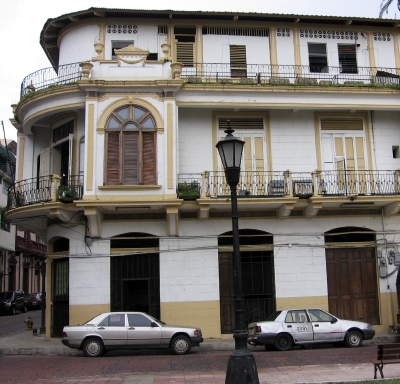


On the bay, at left


and again, on the
Parque Herrera at right:
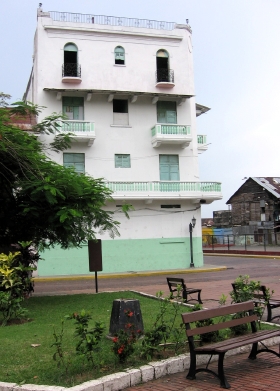


But what really fascinated me was the contrast I saw. Change was constant, and everywhere, seemingly randomly.

This pretty little building at left was just a few doors down from the decaying building shown down below, "waiting for attention."
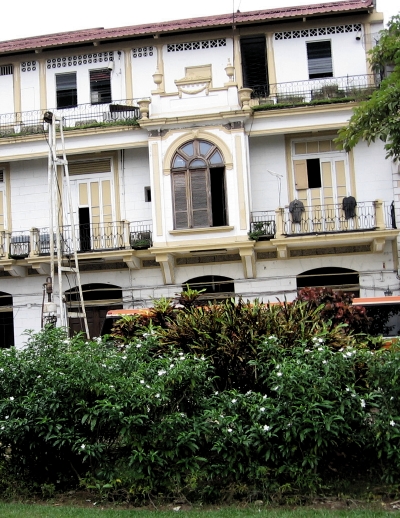

This one, at right, is in process and will soon be quite beautiful.


I think that's part of what captured my imagination about this city - that amazing sense of it springing to life, here and there and all over.


Here is a photo from the IPAT site of the entire Casco Viejo peninsula:
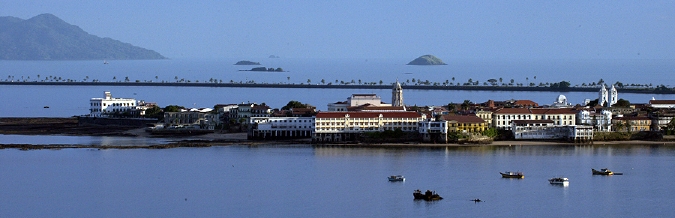
AW
Thursday, September 14, 2006

The artists!

Our priority was getting to know musicians, and we had a wonderful time doing that!


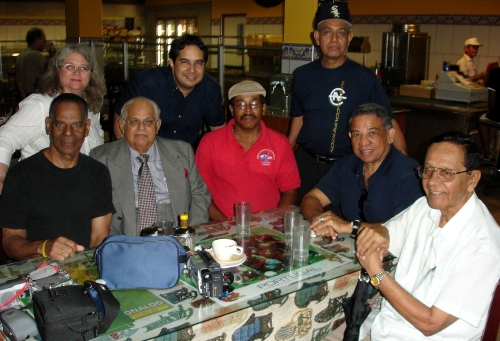
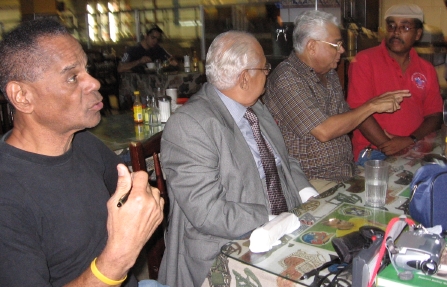
At the Minimax we talked to author and musician Francisco Buckley "Bush" (far left in photo) and other gentlemen: Alfonso Pérez "Mono", Julio Pérez "Monín", Luis Gudin, Germán Vergara, and "Don Chocho" (in photo at right) from the days of conjuntos, with plenty of stories.


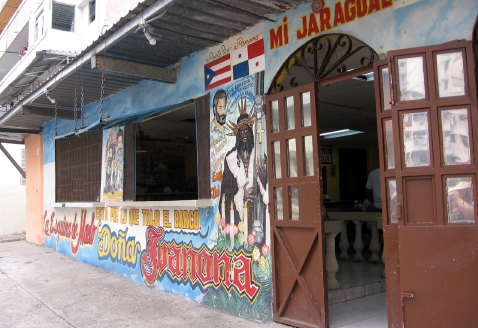
We visited la Fonda Doña Juana in 'la Esquina de Maelo' in Calle 25 Oeste & Bocas del Toro in El Chorrillo, and the very interesting sr. Pedro "Pete" Rodríguez "Sorolo" (as mentioned in Ismael Rivera's song "El Nazareno.")


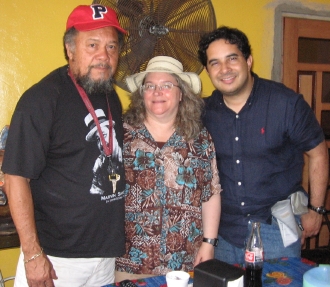
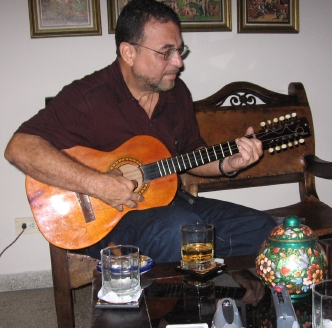
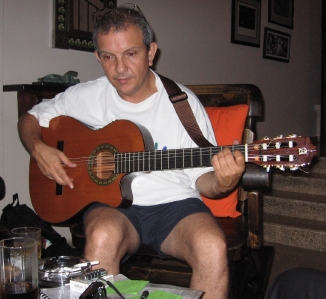
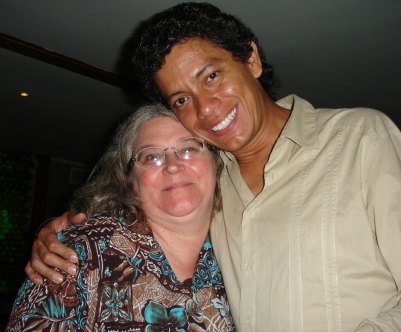
We spent a wonderful evening with Dr. Roberto Cedeño (co-author of "Ligia Elena" and others, above left) Rómulo Castro (author of "La Rosa de los Vientos" and others, above right) and singer/actor Luis Arteaga (photo at right with me.)

They answered our questions, talked about their experiences, and played and sang for us too.

Roberto is also the author of Blades: Calle del Autor, and Rómulo has just published a book/cd called Palabra de Cantada.


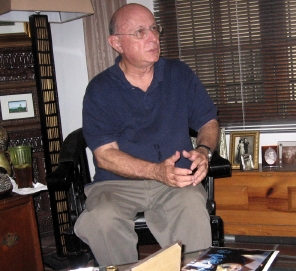
We also had the chance to talk theater with director Bruce Quinn of the Theater of Panama.

The productions of Maestra Vida in 1997 and 2005 were directed by this artist (and starred Luis Arteaga as Carmelo.)

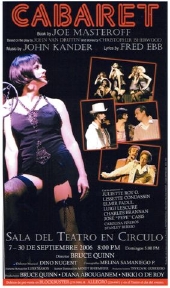
We heard about when Mr. Quinn first met Rubén Blades while producing West Side Story in 1968, when Rubén was cast as one of the Jets. Mr. Quinn is currently directing a production of Cabaret in Panama City.


We also got to spend time with lawyer/singer/timbalero Ponty Correa, who is also known for his "Rubén Blades Tribute" shows, and he played Ramiro in the production of Maestra Vida.


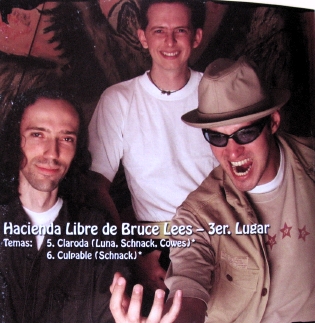
Another young multifaceted talent is Rafael Escobar Cowes, related to Roberto "Tito" Cowes (a renowned Panamanian musician from the 60's), engineer by day and member of rock fusion group Hacienda Libre de Bruce Lees by night (guitar and voice.)


AW

Is it possible to be homesick for somewhere you've only spent 112 hours?

It must be true, because that's what it feels like. I spent less than 5 days in Panama City, Panama but those hours were full of wonderful experiences. I'll try to capture some idea of them here.
I had a specific goal on this trip, that is, research for the web pages at
maestr
avida.com. Most of my time was spent either talking to musicians or visiting Casco Viejo.

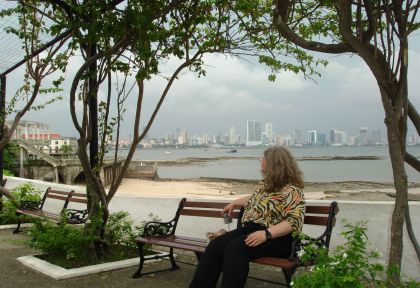
Here is the view across Panama Bay to the newest part of the city, the business district, in Paitilla.
There is building everywhere - cranes sticking up into the sky for new skyscrapers and fancy buildings. But there is also a lot of poverty, sometimes right under those cranes.


Here on the bay is the historical part of the city. The building at left is the Palacio de Gobierno, with the Teatro Nacional next to it. To the right is the Iglesia de San Francisco de Asis. Not far away is the Presidential Palace.


Restorations of the unique historical buldings is gradually progressing in Casco Viejo, a World Heritage Site.

The street behind the Palacio de Gobierno shows the contrast.

We didn't get as much time to walk around this area as I would have liked. There were some areas of real decay and poverty, but with so much building going on, it will be a different place in a few years.


Some are works in progress...


While some buildings sit waiting for attention.


This building, like so many others I photographed, is on the Parque Herrera.


Notice the interesting electrical techniques:


Casco Viejo is also the site of the old Club Unión, which was destroyed in the U.S. invasion in 1989.


Here are some other photos across the bay.


This one is towards the Canal, toward Chorrillo and Cerro Ancón, away from the city itself, taken from Plaza Francia.


The Bridge of the Americas, spanning the Canal, connecting the split halves of Panama.


Here is the city skyline as seen from the Amador Causeway.


¡Muchas gracias!


Para Jorge y la familia Alegria:
Mrs. Silia de Alegría, Jorge Alegría,
Mr. Jorge Alegría M., and Silia Alegría

Estoy agradecida por su amabilidad y su generosidad.

I cannot express in either English or español how much I appreciate your hospitality and kindness to me during my visit.


¡Y también Tony and Marina de Zarak, gracias por toda su ayuda! Thank you for everything.


To Luis Arteaga, thank you for all your time and patience, and your excellent driving. Thank you for making all those interviews happen! And thank you for helping us retrieve the pieces of ourselves we sprinkled everywhere... I look forward to your new cd!


Lastly, thanks to our wonderful taxi driver Rodolfo Bethencourt "Tito" (No. 9818) and his car.

He took good care of us, introduced us to restaurants and characters, and helped us locate the Centro de Capacitación Ascanio Arosemena.

¡Muchas gracias!


AW